AI, Talent and Technology: Building Oregon’s Semiconductor Future
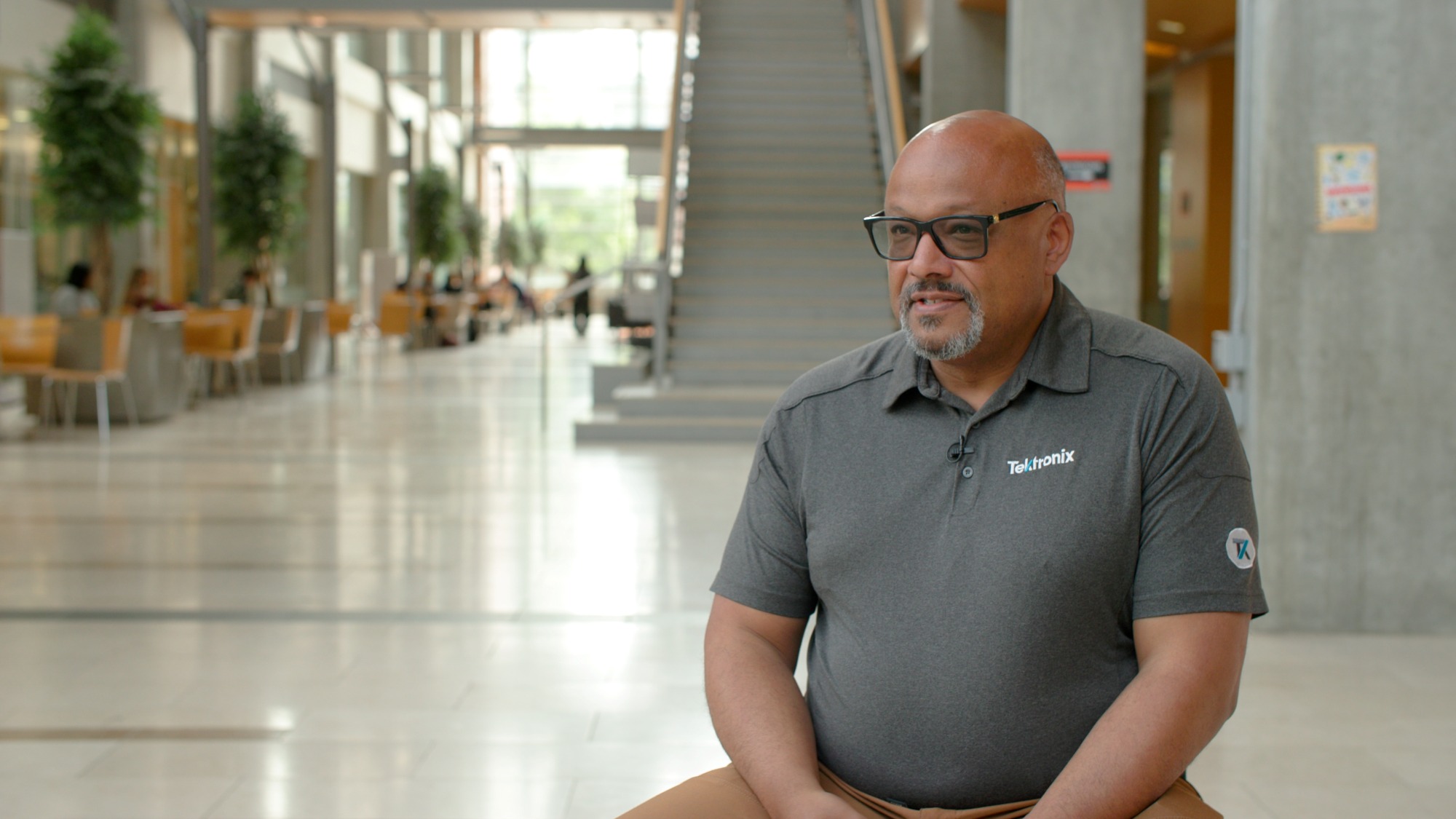
Q&A with Keith Tinsley, principal systems architect at Tektronix
What is your role at Tektronix?
I am a principal systems architect at Tektronix, where I help shape technology strategy at the intersection of advanced measurement systems, artificial intelligence, and semiconductor innovation. My work focuses on developing next generation approaches for test, metrology, data analytics, and AI-enabled workflows that help customers accelerate innovation while improving quality, performance, and manufacturing efficiency
How has Tektronix supported the semiconductor industry in Oregon?
For 80 years, Tektronix has been a cornerstone of Portland’s high-tech industry, providing test and measurement solutions used throughout semiconductor design, manufacturing, validation, and research. Beyond technology, we support workforce development, STEM education, university partnerships and initiatives that strengthen Oregon’s standing as a nationally significant technology hub.
What is the benefit for Tektronix to partner with OSU?
Oregon State University brings world-class research capabilities, talent development programs, and deep connections across Oregon’s semiconductor ecosystem. Through collaboration with OSU, Tektronix can help shape emerging technologies, access new research partnerships, strengthen workforce pipelines, and accelerate innovation in AI-enabled manufacturing, metrology, and advanced semiconductor processes that are important to both industry and national competitiveness
What has your role been with the NSF FAST Engine?
My role with the NSF FAST Engine has focused on industry leadership and technical strategy, along with active participation in its working groups. I help connect Tektronix’s expertise in test, measurement, metrology and AI with FAST’s work to advance semiconductor manufacturing. I’ve also worked to build stronger connections among industry, universities and government partners, bringing different perspectives and expertise together to advance innovation and help strengthen Oregon’s technical workforce.
Tell us about a specific project you are working on that is enabled, strengthened, or supported by FAST.
One area I am excited about is applying AI and advanced data analytics to semiconductor test and metrology workflows. FAST creates opportunities to collaborate with researchers, manufacturers, and software providers across Oregon to improve process control, data sharing, predictive modeling, and measurement quality. These collaborations help accelerate ideas that would be much harder to pursue independently.
What would you like other companies to know about the benefits of FAST?
FAST is much more than a research program. It is a collaborative ecosystem that brings together companies, universities, and public sector organizations around shared challenges and opportunities. Participants gain access to partnerships, talent, research capabilities, and a broader innovation network that can help accelerate technology development while strengthening the competitiveness of the entire regional semiconductor industry.
What is the strategic directive of Tektronix? How do you see that changing over the next 10 years?
Tektronix has long been focused on enabling innovation through trusted measurement and test solutions. Over the next decade, I expect that mission to expand further into AI-enabled workflows, intelligent instrumentation, advanced semiconductor manufacturing, photonics, and data-driven automation. Measurement will remain at the core, but software, analytics, and connected AI-enhanced ecosystems will become increasingly important components of customer value.
What do you see as some of the key semiconductor industry challenges and how will FAST help to address these?
The industry faces challenges in workforce development, supply chain resilience, manufacturing complexity, data integration, and the adoption of AI across production environments. FAST directly addresses these issues by building partnerships among industry and academia, developing AI-enabled process control technologies, expanding talent development, and creating shared infrastructure that helps companies innovate more effectively and competitively.
What are you most excited about for the future of the semiconductor industry in Oregon?
I am excited by Oregon’s opportunity to become a national model for semiconductor innovation that combines research excellence, advanced manufacturing, AI, and workforce development. With strong industry leaders, outstanding universities, and initiatives like FAST, Oregon is well positioned to drive breakthroughs in chip design, manufacturing, packaging, photonics, and smart manufacturing while creating high-value jobs for future generations.